Offsite Bookkeeping Your Businesss Smart Choice
Offsite bookkeeping offers a fresh perspective for managing your business finances. Imagine a system where your records are secure, your time is freed up, and your bottom line benefits. This approach streamlines accounting, from initial setup to ongoing management, while potentially reducing costs and increasing efficiency. We’ll explore the benefits, drawbacks, and crucial steps to ensure a smooth transition to offsite bookkeeping for your business.
This comprehensive guide dives into the specifics of offsite bookkeeping, detailing the process from choosing a provider to managing the relationship. We’ll compare it to on-site bookkeeping and cloud-based solutions, highlighting the advantages and disadvantages of each. This will allow you to make an informed decision about the best bookkeeping strategy for your business.
Defining Offsite Bookkeeping
Offsite bookkeeping is a service that handles financial record-keeping for businesses, but instead of the business keeping the records themselves, a third-party bookkeeping firm takes care of it. This is different from traditional on-site bookkeeping, where the business’s staff manages the records. This arrangement offers numerous benefits, especially for small to medium-sized businesses that may not have the internal resources or expertise for managing complex financial tasks.
Offsite bookkeeping provides a streamlined approach to financial administration, freeing up business owners and staff to focus on core operations and strategic growth. The key difference lies in the location of the records and the personnel responsible for maintaining them. This outsourcing can significantly reduce operational costs and increase efficiency, especially when specialized expertise is required.
Key Characteristics of Offsite Bookkeeping
Offsite bookkeeping differs from on-site bookkeeping primarily in its location and personnel. Offsite bookkeeping involves a third-party service provider handling the financial record-keeping, while on-site bookkeeping is handled by the business’s employees. This distinction has implications for cost, accessibility, and expertise.
Types of Offsite Bookkeeping Services
A range of offsite bookkeeping services is available, catering to diverse business needs. These services can include basic bookkeeping tasks like accounts payable and receivable, bank reconciliation, and journal entries, or they can encompass more comprehensive services, such as payroll processing, tax preparation, and financial reporting. The scope of services offered depends on the specific needs and budget of the client. For example, a small business might opt for a basic bookkeeping package, while a larger corporation might require a more extensive service package.
Comparison of On-Site and Off-Site Bookkeeping
| Feature | On-site Bookkeeping | Offsite Bookkeeping |
|---|---|---|
| Location of Records | Client’s premises | Offsite location (e.g., bookkeeping firm’s office) |
| Personnel | Client’s staff (e.g., accountant, bookkeeper) | Third-party bookkeepers |
| Cost | Can include salaries, benefits, and training costs for in-house staff. This can be a significant ongoing expense. | Typically involves a subscription or per-hour/per-task fee, which can often be more predictable and potentially less expensive in the long run, especially for smaller businesses. |
Steps in Setting Up an Offsite Bookkeeping Arrangement
Setting up an offsite bookkeeping arrangement involves several key steps. These steps ensure a smooth transition and a successful partnership between the business and the third-party provider.
- Identifying needs and goals: Determine the specific bookkeeping tasks needing outsourcing. Consider the volume of transactions, complexity of financial records, and desired level of reporting. This step helps to avoid overspending or missing critical requirements.
- Researching and selecting a provider: Evaluate potential providers based on their experience, expertise, reputation, and pricing structure. Check references and reviews to ensure a reliable partner. Consider their software compatibility, security measures, and communication methods.
- Agreement and contract: Develop a clear contract that Artikels the scope of work, fees, reporting requirements, data security measures, and communication protocols. This protects both parties’ interests.
- Data transfer and training: Transfer existing financial data securely to the provider. Ensure both parties are aware of the processes, systems, and any necessary training.
- Ongoing monitoring and communication: Maintain open communication channels with the provider. Regularly review the progress and results to ensure the bookkeeping services meet expectations.
Benefits of Offsite Bookkeeping
Offsite bookkeeping, where a specialized firm handles your financial records, offers significant advantages for businesses of all sizes. This approach frees up valuable time and resources, enabling business owners to focus on core operations and strategic growth. It also brings a fresh perspective and expert knowledge to financial management, which can often lead to improved efficiency and compliance.
Offsite bookkeeping provides a distinct alternative to in-house accounting or cloud-based solutions, each with its strengths and weaknesses. Understanding the nuanced benefits can help businesses choose the most suitable option for their specific needs and goals.
Cost Advantages of Offsite Bookkeeping
Offsite bookkeeping often proves more cost-effective than hiring and maintaining an in-house accountant. Fixed monthly fees typically cover all the necessary accounting services, eliminating the need for substantial upfront investments in software, hardware, and employee salaries. This predictability allows for better budgeting and financial planning. Businesses can often negotiate rates based on the scope of work and the frequency of reporting needed, further tailoring costs to their particular requirements.
Time Savings for Business Owners
Offsite bookkeeping frees up valuable time for business owners. Instead of spending hours on accounting tasks, business owners can dedicate their time to core functions like sales, marketing, and customer service. This translates to improved productivity and a more focused business strategy. The efficiency gained through streamlined accounting processes directly impacts overall business operations, as it allows for more informed decisions and better resource allocation.
Advantages for Small Businesses
For small businesses, offsite bookkeeping can be a game-changer. It often provides access to expertise and advanced accounting systems that might be financially out of reach. The reduced overhead associated with offsite bookkeeping makes it an attractive option for businesses with limited resources. This expertise often leads to improved financial planning and forecasting, which is critical for the growth and sustainability of small businesses.
Scalability and Flexibility of Offsite Bookkeeping
Offsite bookkeeping is highly scalable. As the business grows, the accounting services can be adjusted accordingly. This adaptability is crucial for businesses navigating periods of rapid expansion or contraction. Moreover, the flexible nature of offsite bookkeeping often allows for custom reporting and analysis tailored to specific business needs, ensuring that financial data aligns with the unique strategies and objectives of the business.
Efficiency Improvements
Offsite bookkeeping can dramatically improve efficiency by automating repetitive tasks, such as data entry and reconciliation. This automation frees up staff to focus on more strategic tasks. Furthermore, offsite firms often have advanced software and expertise that allow for faster and more accurate financial reporting. This contributes to more timely and informed decision-making. For instance, a business experiencing rapid growth can rely on offsite bookkeeping to maintain accurate financial records, enabling timely reporting and analysis to support decision-making.
Comparison to Cloud-Based Bookkeeping Solutions
While cloud-based bookkeeping solutions offer accessibility and convenience, offsite bookkeeping often provides more personalized attention and deeper expertise. Offsite bookkeepers often have a broader range of experience and a nuanced understanding of industry-specific regulations. This tailored approach can be invaluable for businesses navigating complex financial landscapes.
Compliance Assistance
Offsite bookkeepers are adept at ensuring compliance with various tax regulations and industry standards. They stay updated on the latest rules and regulations, helping businesses avoid costly penalties. This proactive approach to compliance is a critical advantage for businesses, as maintaining compliance is often time-consuming and complex.
Potential Advantages and Disadvantages of Offsite Bookkeeping
| Advantages | Disadvantages |
|---|---|
| Cost-effective in the long run | Potential for communication delays |
| Increased efficiency | Dependence on a third-party |
| Expert advice and specialized knowledge | Limited access to real-time data |
| Scalability and flexibility | Potential for higher costs during peak seasons |
| Improved compliance | Potential for less direct control |
Drawbacks and Considerations
Offsite bookkeeping, while offering many advantages, also presents some potential drawbacks and considerations. Understanding these challenges is crucial for making an informed decision about whether offsite bookkeeping is the right fit for your business. Careful planning and due diligence are key to mitigating these risks.
Choosing the right offsite bookkeeping provider and establishing clear communication channels are essential to maximizing the benefits and minimizing potential problems. This section delves into potential security concerns, the importance of provider selection, communication, and how complex accounting needs might impact offsite solutions.
Security Concerns
Offsite bookkeeping inherently involves sharing financial data with a third-party provider. This necessitates robust security measures from both your business and the provider. Security breaches, while not inevitable, are a risk. Critically, the provider’s security protocols are a major factor in protecting your sensitive information.
Importance of Choosing a Reputable Provider
Selecting a reputable offsite bookkeeping provider is paramount. Look for providers with a proven track record, strong security measures, and positive client testimonials. Check for industry certifications or memberships, and scrutinize their data security policies. A reputable provider is an essential element in minimizing security risks.
Clear Communication Channels, Offsite bookkeeping
Effective communication is critical for a successful offsite bookkeeping arrangement. Establish clear lines of communication with your provider, outlining expectations, reporting frequency, and escalation procedures for issues. Regular communication minimizes misunderstandings and ensures your needs are met.
Complex Accounting Needs
Offsite bookkeeping may not be suitable for businesses with exceptionally complex accounting needs. If your business has intricate financial transactions, specialized accounting requirements, or unique regulatory reporting needs, the flexibility and adaptability of an in-house bookkeeper might be more appropriate.
Data Transfer and Access Challenges
Data transfer and access can pose challenges in an off-site bookkeeping setup. Ensure clear procedures are in place for transferring data securely and accessing it when needed. Establish protocols for file sharing and data backup to minimize disruptions.
Potential Security Risks and Mitigation Strategies
| Security Risk | Mitigation Strategy |
|---|---|
| Unauthorized Access | Robust passwords, multi-factor authentication, and regular security audits by the provider. |
| Data Breaches | Encryption of sensitive data, regular software updates, and incident response plans. |
| Loss of Data | Regular data backups, disaster recovery plans, and secure offsite storage of backups. |
| Communication Failures | Clear communication protocols, regular check-ins, and dedicated contact persons. |
| Lack of Transparency | Thorough provider vetting, detailed service agreements, and clear reporting mechanisms. |
Choosing an Offsite Bookkeeping Provider

Source: uenicdn.com
Picking the right offsite bookkeeping provider is crucial for the smooth operation of your business finances. A poorly chosen provider can lead to errors, delays, and potentially costly issues. This section details the essential criteria for selecting a reliable and capable provider.
Essential Criteria for Selection
Selecting an offsite bookkeeping provider requires careful consideration. A good provider should align with your specific needs and demonstrate a commitment to accuracy, efficiency, and security. Factors like their experience, expertise, technology, and service level agreements (SLAs) are critical.
Experience and Expertise
Experience is a strong indicator of a provider’s competence. Look for providers with a proven track record in handling similar business types and complexities to yours. A provider with a deep understanding of industry-specific accounting rules and regulations will be better equipped to manage your financial data. This expertise can prevent costly mistakes and ensure accurate reporting. For example, a provider specializing in real estate bookkeeping will have a better understanding of the nuances of property transactions compared to a provider with general accounting experience.
Technology and Security
The technology a provider uses significantly impacts the speed and accuracy of your bookkeeping. Look for providers utilizing up-to-date accounting software, cloud-based systems, and secure data storage solutions. Robust security measures are paramount to protecting sensitive financial data. Inquire about their data encryption protocols, access controls, and disaster recovery plans. Consider providers who use multi-factor authentication to ensure only authorized personnel access your data.
Service Level Agreement (SLA)
A clear and well-defined SLA is vital. It articulates the responsibilities of both parties and sets expectations for response times, error resolution, and communication channels. A strong SLA safeguards your interests and helps you anticipate potential issues. This agreement should clearly define the provider’s obligations, including the timeframe for processing transactions, resolving errors, and responding to inquiries. A good SLA should also detail penalties for missed deadlines or service failures.
Key Questions to Ask Potential Providers
The following table summarizes important questions to ask potential offsite bookkeeping providers to assess their capabilities and suitability for your business:
| Category | Question |
|---|---|
| Experience & Expertise | How long has your company been in business? What types of businesses have you worked with? What is your experience with [your industry]? |
| Technology & Security | What accounting software do you use? What security measures do you have in place to protect client data? How do you handle data backups and disaster recovery? |
| Service Level Agreement (SLA) | Can you provide a detailed SLA outlining your service level commitments? What is your typical response time for urgent requests? What are your procedures for resolving errors? |
| Communication & Support | What is your typical communication process? How can I reach you if I have questions or concerns? |
| Pricing & Transparency | Can you provide a detailed breakdown of your pricing structure? What are your fees for different services? Are there any hidden costs? |
Implementation and Management
Source: velan-bookkeeping.com
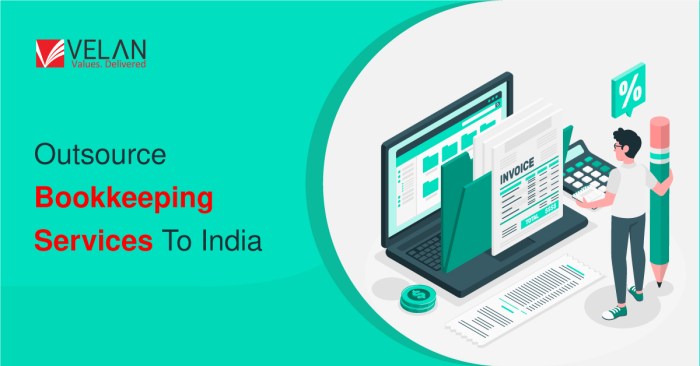
Transitioning to offsite bookkeeping requires careful planning and execution. A smooth onboarding process, clear communication channels, and a well-defined management strategy are crucial for a successful partnership. This section details the steps involved in making the switch and ensuring a productive working relationship with your bookkeeping provider.
Onboarding with an Offsite Bookkeeping Provider
The onboarding process with an offsite bookkeeping provider is often a key indicator of the provider’s professionalism and efficiency. It sets the stage for future collaboration and should involve a clear understanding of expectations and procedures. This includes establishing a timeline for data transfer, defining roles and responsibilities, and outlining communication protocols.
- Initial Consultation: This phase involves discussing your specific bookkeeping needs, reviewing your existing financial records, and identifying potential challenges. The provider should ask pertinent questions to understand your business operations and goals. This proactive step ensures a customized approach and avoids misunderstandings down the road.
- Data Transfer Agreement: A formal agreement outlining the method, schedule, and responsibilities for transferring your financial records is essential. This agreement should clearly define who owns the data and what the process is for any corrections or clarifications.
- User Access and Training: Establish clear user access permissions for your team. This ensures only authorized personnel can access sensitive financial information. The provider should provide comprehensive training on their software and systems, enabling your team to effectively use the tools for data entry and reporting.
Clear Communication and Data Transfer Protocols
Effective communication and precise data transfer are fundamental to a successful offsite bookkeeping arrangement. A shared understanding of how and when information will be exchanged minimizes errors and ensures timely processing.
- Establishing Communication Channels: Designate specific communication channels, like email or dedicated phone lines, for all inquiries and updates. Establish clear response times for important requests. A well-defined communication plan ensures everyone is on the same page.
- Defining Data Transfer Protocols: Agree on specific file formats (e.g., CSV, Excel), data fields, and transfer methods (e.g., secure file transfer protocol, cloud storage). A standardized approach minimizes errors during data migration and ensures data integrity.
- Regular Check-Ins: Schedule regular check-in meetings with the provider to review progress, address any issues, and ensure the bookkeeping process is aligned with your expectations. Regular communication builds trust and allows for proactive problem-solving.
Managing the Relationship with the Provider
Building a strong relationship with your offsite bookkeeping provider is crucial for ongoing success. This involves open communication, clear expectations, and proactive problem-solving.
- Regular Reporting: Establish clear reporting schedules to receive updates on financial statements, transaction details, and any issues identified. Regular reports ensure you’re always informed of your financial position.
- Feedback Mechanisms: Establish a system for providing feedback on the provider’s performance. This can include regular surveys, feedback forms, or dedicated feedback channels. Constructive feedback allows the provider to adapt and improve their services.
- Escalation Procedures: Article a clear process for escalating concerns or issues to the provider’s management team. A well-defined escalation procedure ensures the timely resolution of critical matters.
Communicating Bookkeeping Needs Effectively
Clearly articulating your bookkeeping needs ensures the provider understands your business requirements and provides appropriate services.
- Detailed Requirements Document: Create a document outlining your specific bookkeeping needs, including transaction types, reporting requirements, and any special considerations. A detailed document serves as a guide for both parties.
- Example Transactions: Providing examples of typical transactions will help the provider understand the complexities of your business. This helps to streamline the process and prevent misunderstandings.
- Specific Reporting Needs: Detail the specific reports you need and the frequency with which you need them. This ensures the provider provides reports in a format that meets your specific requirements.
Step-by-Step Guide for Transferring Financial Records
A well-defined process for transferring financial records is crucial for maintaining data integrity and minimizing errors.
- Inventory Your Records: List all relevant financial records, including bank statements, invoices, receipts, and other supporting documents.
- Organize Records: Categorize and organize the records into a logical order, ensuring easy retrieval and access.
- Transfer Records: Transfer the organized records to the provider using the agreed-upon method. Maintain a log of transferred documents for tracking purposes.
- Verify Records: Confirm that the records have been received and processed accurately by the provider.
Monitoring Provider Performance
Regularly monitoring the provider’s performance ensures the quality of services meets your expectations.
- Regular Review of Financial Statements: Review financial statements provided by the provider to ensure accuracy and compliance with your requirements.
- Track Resolution of Issues: Maintain a record of any issues raised and the resolution process. This data provides valuable insight into the provider’s responsiveness and efficiency.
- Seek Client Feedback: Gather feedback from clients to assess the quality of services provided by the provider. Client feedback offers a valuable perspective.
Common Issues and Resolutions
| Issue | Resolution |
|---|---|
| Late or Inaccurate Reporting | Review the reporting agreement. If issues persist, escalate to the provider’s management. |
| Data Errors | Verify data accuracy and identify the source of the error. Request corrections from the provider. |
| Communication Breakdown | Establish clear communication channels and ensure regular check-ins. Follow up on any unanswered questions or concerns. |
| Unclear Responsibilities | Review the contract to clarify roles and responsibilities. Discuss any ambiguities with the provider. |
Technology and Automation: Offsite Bookkeeping
Offsite bookkeeping is deeply intertwined with technology. Modern accounting practices rely heavily on digital tools to manage data efficiently and securely. This integration streamlines workflows, enhances accuracy, and allows for real-time insights into financial performance. Automation is key to making offsite bookkeeping both effective and cost-efficient.
Impact of Technology on Offsite Bookkeeping
Technology has fundamentally altered how offsite bookkeeping operates. Cloud-based solutions, sophisticated accounting software, and automated processes have become indispensable components. This allows bookkeepers to access and manage client data remotely, fostering greater efficiency and responsiveness.
Accounting Software and Cloud-Based Solutions
Accounting software is the backbone of offsite bookkeeping. It provides the structure for organizing transactions, tracking expenses, generating reports, and managing financial records. Cloud-based solutions, in particular, are essential. They offer accessibility from anywhere with an internet connection, enabling seamless collaboration between the bookkeeper, the client, and other stakeholders. This remote access is critical for offsite bookkeeping, as it eliminates geographical limitations and facilitates real-time data sharing.
Automation in Bookkeeping
Automation plays a pivotal role in streamlining the bookkeeping process. Automated tasks, such as invoice processing, bank reconciliation, and report generation, significantly reduce manual effort and potential errors. This frees up bookkeepers to focus on more strategic tasks, such as analysis and advisory services.
Real-Time Data Access
Real-time data access is a significant benefit of cloud-based bookkeeping. This means that financial information is available immediately, enabling clients to track their financial health in real time. This immediacy allows for quicker responses to financial situations and helps clients make informed decisions.
Data Security in Offsite Bookkeeping
Data security is paramount in offsite bookkeeping. Robust security measures, such as encryption and multi-factor authentication, are essential for protecting sensitive financial information. Reputable offsite bookkeeping providers prioritize security, often employing advanced technologies to prevent unauthorized access and data breaches.
Example of Improved Data Security
One example of enhanced data security is the use of two-factor authentication. This requires a user to enter a code from a mobile device in addition to their password. This extra layer of security makes it significantly more difficult for unauthorized individuals to access sensitive financial information. Similarly, data encryption ensures that even if a database is compromised, the information remains unreadable without the decryption key.
Features of Popular Accounting Software
| Software | Key Feature 1 | Key Feature 2 | Key Feature 3 |
|---|---|---|---|
| Xero | Automated bank feeds | Customizable reports | Mobile app |
| QuickBooks Online | Invoice and expense tracking | Payroll integration | Real-time data access |
| Zoho Books | Multi-currency support | Inventory management | Collaboration tools |
This table highlights key features of popular accounting software that are beneficial for offsite bookkeeping. These features enable efficient data management, report generation, and collaboration.
Legal and Regulatory Aspects
Offsite bookkeeping, while offering flexibility and cost-effectiveness, necessitates careful consideration of legal and regulatory frameworks. Navigating these aspects is crucial for maintaining compliance and avoiding potential issues. Understanding data privacy, financial reporting standards, and relevant laws is paramount for a smooth operation.
Offsite bookkeepers are responsible for adhering to the same legal and regulatory standards as in-house bookkeepers. This includes maintaining confidentiality, accurately recording transactions, and complying with reporting requirements. Failure to do so can lead to significant penalties and reputational damage.
Data Privacy Regulations
Data privacy regulations, such as GDPR (General Data Protection Regulation) and CCPA (California Consumer Privacy Act), are critical for offsite bookkeeping. These regulations mandate how personal data is collected, used, and protected. Offsite providers must ensure robust security measures to safeguard sensitive financial information, adhering to the principles of data minimization, purpose limitation, and data security.
Financial Reporting Regulations
Financial reporting regulations, like Generally Accepted Accounting Principles (GAAP) and International Financial Reporting Standards (IFRS), dictate how financial statements are prepared and presented. Offsite bookkeepers must understand these standards and ensure that financial data is recorded and reported accurately to meet regulatory requirements. This often involves using standardized accounting software and procedures to maintain consistency.
Industry Best Practices for Data Security and Compliance
Implementing strong security protocols is vital for offsite bookkeeping. Industry best practices include multi-factor authentication, encryption of data both in transit and at rest, regular security audits, and clear data access policies. Regularly reviewing and updating security measures is crucial to adapting to evolving threats and maintaining compliance.
List of Relevant Laws and Regulations
A comprehensive list of relevant laws and regulations is not exhaustive and will vary by jurisdiction. However, some key areas include:
- General Data Protection Regulation (GDPR): This EU regulation sets strict guidelines for data protection, requiring organizations to ensure the security and privacy of personal data. Failure to comply can result in substantial fines.
- California Consumer Privacy Act (CCPA): This US state law gives California residents greater control over their personal information. Offsite bookkeepers need to be aware of the rights and obligations regarding California residents’ data.
- Sarbanes-Oxley Act (SOX): In the US, this act mandates financial reporting accuracy and internal controls, applicable to businesses subject to SEC oversight. Offsite providers must work closely with their clients to ensure compliance.
- Financial Institutions Regulatory Authority (IFRA): Different countries and regions may have their specific regulations and bodies, like the IFRA in certain regions. These regulations and authorities must be adhered to depending on the jurisdiction.
Complying with these and other relevant laws and regulations is crucial to ensure the legal and ethical operation of offsite bookkeeping services. Understanding and implementing these best practices will minimize risks and protect clients’ data.
Final Wrap-Up
In conclusion, offsite bookkeeping presents a compelling alternative to traditional methods, offering flexibility, cost savings, and enhanced efficiency. By understanding the benefits, potential drawbacks, and crucial steps in implementation, businesses can confidently navigate the transition to offsite bookkeeping. Remember to carefully evaluate providers, establish clear communication channels, and prioritize security to reap the full rewards of this modern approach to accounting.