Remote Bookkeeping Companies Your Guide
Remote bookkeeping companies are revolutionizing how businesses manage their finances. They offer a flexible, cost-effective alternative to in-house bookkeepers, catering to various needs, from small businesses to startups and freelancers. This guide dives deep into the world of remote bookkeeping, exploring everything from service types and pricing to choosing the right company and working effectively with them.
We’ll cover the essential features of top-tier remote bookkeeping companies, including advanced services like financial forecasting and tax preparation. Understanding security measures and communication methods is crucial. We’ll also compare the costs of remote vs. in-house options and detail how to select the perfect company for your needs. Plus, we’ll examine industry trends and the future of remote bookkeeping, highlighting the evolving skills and expertise required.
Introduction to Remote Bookkeeping Companies
Remote bookkeeping companies handle the financial records of businesses, but from a distance. They’re essentially virtual accounting firms, providing specialized services to clients without the need for a physical office. This model has become increasingly popular due to its flexibility and cost-effectiveness for many businesses.
These companies offer a range of services, tailoring their expertise to meet specific needs. They’re equipped to handle various tasks, from basic record-keeping to complex financial reporting, helping clients stay organized and compliant.
Types of Bookkeeping Services
Remote bookkeeping companies offer a diverse range of services, catering to various business sizes and needs. They typically specialize in providing bookkeeping support for small businesses, startups, and freelancers. Services often include tasks such as bank reconciliation, invoice processing, expense tracking, and financial reporting. Some firms even offer more specialized services like payroll processing or tax preparation.
Typical Clientele
The typical clientele for remote bookkeeping services encompasses a broad spectrum of businesses. Small businesses, startups, and freelancers often benefit from the flexibility and cost-effectiveness of remote bookkeeping. These clients may not have the internal resources or expertise to manage their financial records efficiently, making remote bookkeeping a valuable solution. Additionally, individuals or sole proprietors may find these services helpful for managing their finances.
Benefits of Remote Bookkeeping Services
Using remote bookkeeping services offers a variety of advantages over in-house bookkeepers. The flexibility and scalability of remote bookkeeping are key advantages. You can easily adjust the level of service as your business grows or contracts. Remote companies often have access to advanced software and technology, providing more efficiency and accuracy than a smaller in-house team.
Cost Comparison: In-House vs. Remote Bookkeeping, Remote bookkeeping companies
The cost of bookkeeping varies significantly depending on the chosen method. A comparison table illustrates the key differences.
| Category | In-House | Remote |
|---|---|---|
| Initial Setup Costs | High; includes hiring, training, office space, software licenses, and equipment. | Low; minimal setup costs, often with access to already established software and infrastructure. |
| Ongoing Costs | High; includes salary, benefits, taxes, office expenses, and software/technology maintenance. | Low; typically involves a subscription-based fee that covers service packages, software updates, and support. |
Key Features and Services

Source: cloudfront.net
Remote bookkeeping companies offer a streamlined approach to financial management, handling everything from recording transactions to preparing reports. They’re particularly valuable for businesses that need accurate and timely financial data without the overhead of in-house staff. This allows businesses to focus on core operations while ensuring their financial health is in capable hands.
Essential Features of Top-Tier Remote Bookkeeping Companies
Top-tier remote bookkeeping companies stand out due to their robust features, ensuring accuracy and efficiency. These features are crucial for managing finances effectively. They often utilize advanced software and security protocols, enabling smooth operation and trustworthy data handling.
- Advanced Accounting Software: Many top-tier companies leverage industry-leading accounting software, like QuickBooks, Xero, or Sage. These platforms provide powerful tools for managing accounts, tracking transactions, and generating insightful reports.
- Real-Time Reporting and Data Analysis: Real-time access to financial data allows for quick identification of trends and potential issues. This proactive approach enables businesses to make informed decisions.
- Automated Processes: Automation is key for efficiency. Remote bookkeeping companies streamline tasks like invoice processing and reconciliation, reducing manual errors and saving time.
- Customizable Reporting: Companies can tailor reports to meet their specific needs. Customizable reporting options allow for a deeper dive into specific financial areas, empowering businesses with more detailed insights.
Advanced Bookkeeping Services
Beyond basic bookkeeping, reputable companies often provide a suite of advanced services. These add significant value to clients.
- Financial Forecasting: Predicting future financial performance is invaluable for strategic planning. Experienced bookkeepers can create financial projections, considering various scenarios and factors.
- Budgeting and Financial Planning: Companies can gain valuable insight by having a budget and financial plan. This allows them to stay on track and allocate resources effectively.
- Tax Preparation and Filing: Many remote bookkeeping companies provide tax preparation services, taking the burden off clients. This service can be especially helpful for those with complex tax situations or limited in-house expertise.
- Payroll Processing (in some cases): Some remote bookkeeping companies offer payroll processing services, handling payroll calculations, tax withholdings, and payments to employees.
Security and Data Protection
Data security is paramount in the world of finance. Remote bookkeeping companies prioritize the protection of client data.
- Secure Data Storage: Reputable companies utilize secure cloud storage solutions, encrypting sensitive financial data and ensuring confidentiality. This protects against unauthorized access.
- Data Backup and Recovery: Regular data backups are crucial for disaster recovery. This safeguards against data loss due to unforeseen circumstances.
- Multi-Factor Authentication (MFA): MFA adds an extra layer of security, requiring multiple verification steps before accessing sensitive information. This prevents unauthorized access.
- Compliance with Regulations: Adherence to relevant financial regulations, such as GDPR, is essential. This assures clients that their data is handled by legal requirements.
Accounting Software and Tools
The right accounting software can make a significant difference in efficiency and accuracy. Companies use various tools to accomplish this.
- QuickBooks Online: A popular choice for its user-friendly interface and comprehensive features.
- Xero: Known for its cloud-based platform and robust reporting capabilities.
- Zoho Books: A comprehensive suite of accounting tools with a range of features for small to medium-sized businesses.
- FreshBooks: A good option for businesses that focus primarily on invoicing and tracking client payments.
Communication and Support Channels
Effective communication is vital for successful partnerships. Companies should have readily available support options.
- Email Support: Email is a common and accessible communication method.
- Phone Support: Phone support allows for immediate clarification and problem-solving.
- Live Chat Support: Live chat provides real-time assistance and quick responses.
- Dedicated Account Manager: A dedicated account manager ensures personalized attention and consistent communication throughout the process.
Choosing the Right Remote Bookkeeping Company
Picking the right remote bookkeeping company is crucial for your business’s financial health. It’s not just about finding someone who can handle your books; it’s about selecting a partner who understands your specific needs and can provide reliable, accurate, and efficient services. This careful selection process will save you time, money, and headaches down the road.
Finding a remote bookkeeping company that aligns with your business’s goals and financial needs requires a thoughtful evaluation process. You need to consider factors like experience, expertise, pricing models, and the company’s reputation. A well-chosen partner can streamline your financial operations, freeing you to focus on other aspects of your business.
Factors to Consider When Selecting a Remote Bookkeeping Company
Several key factors influence your decision when choosing a remote bookkeeping company. Experience and expertise in the industry, pricing structures, and the company’s reputation are essential elements to assess.
- Experience and Expertise: Look for a company with a proven track record. Years of experience handling similar businesses and industry knowledge are valuable indicators of competence. Consider their specialization; do they cater to businesses in your industry? A company with experience handling similar financial structures or unique accounting needs will likely better serve your specific requirements.
- Pricing Models: Understanding the different pricing models is crucial. Common models include fixed-fee, hourly, and project-based. Fixed-fee offers a predictable cost, while hourly allows for more flexibility for variable tasks. Project-based pricing is suitable for specific, defined projects. Inquire about the breakdown of costs and any hidden fees to ensure transparency.
- Reputation and Reviews: Check online reviews and testimonials. Positive feedback from previous clients provides insight into the company’s service quality, responsiveness, and professionalism. Look for consistency in the reviews, as a few negative comments might not be indicative of a poor overall experience.
Evaluating Potential Remote Bookkeeping Companies: A Checklist
A checklist can help you systematically evaluate potential bookkeeping companies.
- Experience: How many years of experience does the company have? What types of businesses have they worked with?
- Expertise: Do they specialize in your industry or have experience with similar financial structures? Are they up-to-date with current accounting standards and regulations?
- Pricing: What are the different pricing models offered? Are there any hidden fees or additional charges? Obtain detailed proposals outlining the specific services included in each pricing structure.
- Communication: How responsive and professional are they in their communication? Are they available to answer questions and address concerns promptly?
- Reputation: What are the reviews and testimonials from previous clients? Are there any complaints or negative feedback? Look for companies with a history of positive feedback.
- Security: How do they protect client data? Do they have robust security measures in place? Understanding their security protocol is vital for sensitive financial information.
Pricing Models Comparison
Different bookkeeping companies employ various pricing models. Understanding these models is crucial for budgeting and making informed decisions.
| Company | Fixed-Fee | Hourly | Project-Based |
|---|---|---|---|
| Company 1 | $1,500/month (includes basic bookkeeping and reporting) | $50/hour | $2,000 for quarterly financial statements |
| Company 2 | $2,000/month (includes all bookkeeping and tax preparation) | $75/hour | $3,000 for annual financial audit |
| Company 3 | $1,000/month (basic bookkeeping and reporting, excluding tax preparation) | $40/hour | $1,500 for setting up new accounting software |
Note that these are illustrative examples and actual pricing will vary greatly based on the complexity of the bookkeeping services required.
Working with Remote Bookkeeping Companies
Working with a remote bookkeeping company can streamline your financial processes and save you time and resources. Understanding the typical workflow and communication methods is key to a smooth and successful partnership. This section will outline the steps involved in collaborating with a remote bookkeeping firm.
Typical Workflow and Communication Process
Remote bookkeeping companies typically operate on a project-based or subscription-based model. Communication is usually handled through email, online portals, or video conferencing. The workflow often involves initial setup, data entry, report generation, and ongoing support. Regular updates and clear communication channels are crucial for successful collaboration.
Necessary Documents and Information
Providing the right information is vital for accurate bookkeeping. Clients need to furnish essential documents like bank statements, invoices, receipts, and tax forms. The exact documents required will vary depending on the company’s specific needs. Clear instructions and expectations from the bookkeeping firm will help ensure all necessary information is collected and submitted accurately.
- Bank Statements: Provide a complete set of bank statements covering the relevant period. Ensure statements are clear and legible.
- Invoices and Receipts: Submit all invoices and receipts for transactions during the period being processed.
- Tax Forms: Provide relevant tax forms (e.g., 1099s, W-2s, etc.) as needed for accurate reporting and tax compliance.
- Financial Records: Include any other financial records pertinent to the company’s operations.
Maintaining Open Communication
Maintaining open communication is paramount to a successful partnership. This involves regular check-ins, promptly responding to inquiries, and actively seeking clarification when needed. Setting up regular communication schedules (e.g., weekly or bi-weekly meetings) can help ensure smooth collaboration. Clearly outlining expectations for communication will help both parties understand and manage expectations.
Resolving Issues or Concerns
A good remote bookkeeping company will have a clear process for resolving issues. Be proactive in communicating concerns or problems. Document the issue, including the steps taken to resolve it, the date and time of communication, and any relevant documents. If the problem persists, escalating the issue to a supervisor or manager can often lead to a more rapid resolution. Always be respectful and professional in your communication, even when facing difficulties.
Industry Trends and Future of Remote Bookkeeping: Remote Bookkeeping Companies

The remote bookkeeping industry is rapidly evolving, driven by technological advancements and changing business needs. Businesses are increasingly seeking streamlined, efficient, and cost-effective solutions for their financial management, pushing the need for skilled remote bookkeepers to the forefront. This evolution demands a clear understanding of the emerging trends shaping the future of this sector.
The future of remote bookkeeping is intricately linked to technological integration. Automation, AI, and cloud-based platforms are revolutionizing how bookkeeping tasks are performed, ultimately impacting the skills required to excel in this field. The industry is not just adapting to change; it’s proactively shaping it.
Emerging Trends in Remote Bookkeeping
Remote bookkeeping is undergoing a significant transformation, driven by a combination of automation, AI, and cloud-based solutions. These advancements are not just improving efficiency; they’re fundamentally changing the landscape of the industry.
- Automation: Software solutions are automating many repetitive tasks, from data entry to invoice processing. This frees up bookkeepers to focus on more strategic and analytical work, like financial analysis and report generation. For instance, companies like Xero and QuickBooks offer robust automation features, allowing bookkeepers to streamline processes and significantly reduce manual effort.
- AI Integration: Artificial intelligence is increasingly used for tasks like data validation, invoice matching, and even basic financial reporting. This leads to greater accuracy and efficiency, enabling bookkeepers to analyze data more effectively and provide more insightful financial guidance to clients. A growing number of bookkeeping platforms are integrating AI-powered tools to aid in these processes.
- Cloud-Based Solutions: The shift to cloud-based platforms is accelerating, providing real-time access to data, collaboration features, and improved security. This flexibility is crucial for remote work and enhances communication between bookkeepers and clients. Cloud-based accounting software allows for seamless collaboration, reducing errors, and improving overall workflow.
Impact of Technological Advancements
The integration of technology into bookkeeping practices is dramatically changing the nature of work and the skills required.
- Increased Efficiency and Accuracy: Automation and AI are reducing errors and improving the speed of tasks, leading to more accurate financial records and faster reporting. This is a significant benefit for both businesses and bookkeepers, who can focus on higher-level tasks.
- Reduced Costs: Automation and cloud solutions can significantly reduce operational costs for businesses, freeing up resources for other areas of growth and development. This creates a more competitive environment for remote bookkeeping services, leading to more accessible financial management for small and medium-sized enterprises.
- Enhanced Data Analysis: AI-powered tools enable deeper data analysis, allowing bookkeepers to identify trends, patterns, and potential issues within financial data. This insights-driven approach helps businesses make better financial decisions.
Future Growth Prospects
The remote bookkeeping industry is poised for continued growth, driven by factors such as the increasing adoption of remote work models, the need for efficient financial management by businesses of all sizes, and the continued evolution of technology.
- Growing Demand: As more businesses adopt remote work models, the need for remote bookkeeping services will continue to increase, creating more opportunities for skilled bookkeepers. This growth is expected to continue as more businesses recognize the value of efficient and accurate financial management.
- Expansion of Services: Remote bookkeeping companies are likely to expand their services to include areas like financial planning, budgeting, and business advisory. This is a natural progression as businesses seek comprehensive financial support.
- Global Reach: The digital nature of remote bookkeeping allows for a global reach, enabling businesses to access financial expertise regardless of geographical location. This opens up a larger pool of skilled bookkeepers and clients.
Evolving Skills and Expertise
The remote bookkeeping field is evolving, requiring a new set of skills beyond traditional bookkeeping.
- Technical Proficiency: A strong understanding of accounting software, automation tools, and cloud-based platforms is essential. Bookkeepers need to be adept at navigating and utilizing these tools effectively.
- Data Analysis and Interpretation: The ability to analyze financial data, identify trends, and provide insights to clients is crucial. This involves more than just recording transactions; it’s about understanding the story behind the numbers.
- Communication and Client Management: Effective communication skills, both written and verbal, are paramount for maintaining strong client relationships and providing excellent service. Remote bookkeepers need to be skilled communicators, building trust and understanding with clients.
Illustrative Case Studies (Examples)
Source: cdn-website.com
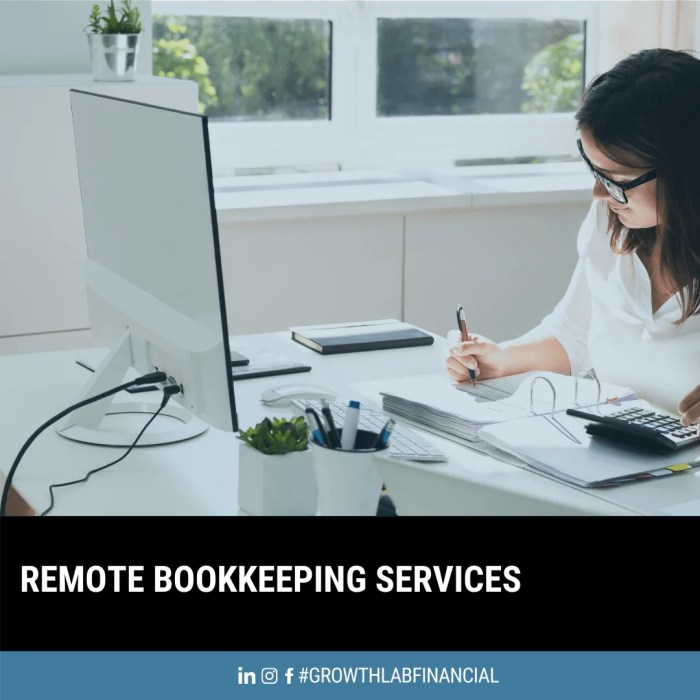
Remote bookkeeping services are rapidly gaining popularity as businesses seek efficient and cost-effective ways to manage their finances. Real-world examples demonstrate the significant advantages these services can offer, highlighting successful collaborations and the positive impact on various businesses. These case studies reveal the practical applications and benefits, shedding light on the practicalities of integrating remote bookkeeping into a business’s operations.
Understanding how different businesses have successfully implemented remote bookkeeping is crucial. It showcases the diverse ways these services can be tailored to meet specific needs, from startups to established companies. By examining successful strategies, businesses can gain valuable insights into optimizing their financial processes.
Successful Collaboration Examples
Successful partnerships between businesses and remote bookkeeping companies often stem from clear communication and shared goals. A streamlined onboarding process and regular communication channels are essential for smooth collaboration. This ensures the bookkeeping company understands the business’s specific needs and the business can effectively utilize the service.
- Example 1: A small e-commerce business, “TechGear,” struggled to keep up with the increasing volume of transactions. By partnering with a remote bookkeeping company, TechGear significantly reduced its administrative workload, allowing it to focus on growing its product line and marketing efforts. The company saw a notable improvement in its financial reporting accuracy, leading to improved cash flow management and informed business decisions. The remote bookkeeping company’s expertise enabled TechGear to optimize its financial processes and identify areas for further cost savings.
- Example 2: A growing software company, “InnovateSoft,” was experiencing a bottleneck in their accounting department. A remote bookkeeping company provided the necessary expertise to handle their accounts payable, accounts receivable, and general ledger tasks. This freed up their in-house accounting staff to concentrate on strategic initiatives, accelerating their company’s growth trajectory.
Challenges and Solutions in Implementing Remote Bookkeeping
While remote bookkeeping offers significant advantages, challenges can arise. Understanding and proactively addressing these challenges is crucial for a successful implementation.
| Challenge | Solution |
|---|---|
| Data migration and integration issues | A well-defined data migration plan and a dedicated project manager to oversee the process can mitigate integration challenges. Clear communication channels and regular updates between the business and the bookkeeping company are critical to ensure a smooth transition. |
| Maintaining data security and compliance | Using secure cloud-based systems and adhering to industry best practices for data security, such as encryption and access controls, is essential. Regular audits and reviews can help identify and rectify any vulnerabilities. |
| Differences in working styles and communication | Establishing clear communication protocols, regular check-ins, and utilizing project management tools can help bridge any gaps in communication style. Building trust and rapport between the business and the bookkeeping company through transparent communication is key. |
Evaluating the Effectiveness of Remote Bookkeeping
Evaluating the effectiveness of a remote bookkeeping service involves assessing various success metrics. Tracking key performance indicators (KPIs) allows for objective measurements of the service’s impact.
- Accuracy of financial reporting: Thoroughly examining financial statements for errors or discrepancies is essential to ensure accuracy. This includes regular reconciliation of accounts and review of reports generated by the bookkeeping company.
- Efficiency gains: Quantifying the time saved by the business through outsourcing bookkeeping tasks helps determine the efficiency gains. This can be tracked by measuring the reduction in time spent on administrative tasks and the increase in time available for strategic activities.
- Cost savings: Analyzing the overall costs associated with the remote bookkeeping service compared to the costs of in-house bookkeeping staff helps to demonstrate cost savings. This includes calculating the labor costs, software costs, and other associated expenses.
Client Journey from Initial Contact to Implementation
A typical client journey involves several key steps, starting with initial contact and culminating in the successful implementation of remote bookkeeping services.
- Initial Contact and Consultation: This involves understanding the business’s needs and goals, outlining the services offered by the bookkeeping company, and determining a suitable service plan.
- Service Agreement and Onboarding: A detailed service agreement articulates the terms and conditions of the collaboration, while onboarding processes ensure the smooth transition of data and tasks.
- Implementation and Ongoing Support: The implementation phase involves setting up the necessary systems and workflows, while ongoing support ensures the client receives assistance throughout the process. Regular communication, updates, and prompt response to queries are critical.
Summary
In conclusion, remote bookkeeping companies offer a streamlined and cost-effective solution for businesses of all sizes. By carefully considering factors like experience, expertise, pricing, and reputation, you can find the perfect fit for your business. This guide has equipped you with the knowledge to navigate the world of remote bookkeeping and confidently partner with a reputable company. The future looks bright for remote bookkeeping, and this guide provides the tools to succeed in this evolving landscape.